
Views: 0 Author: Site Editor Publish Time: 2025-11-03 Origin: Site
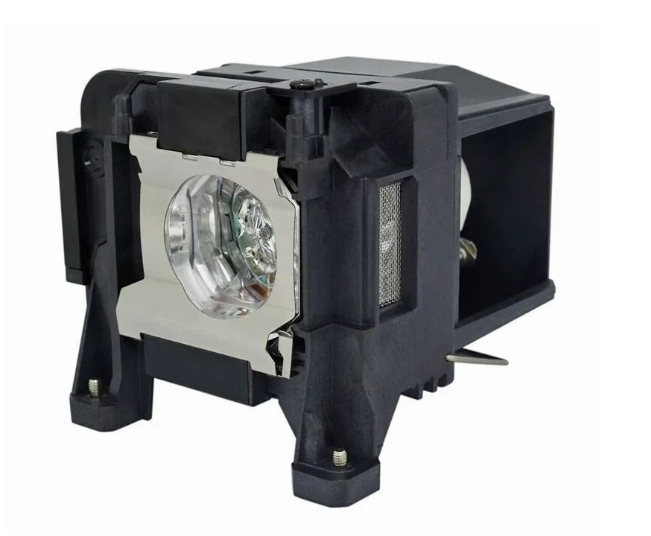
One significant advantage of bulb-based projectors is their low cost, allowing you to purchase a bulb-based projector at a much lower price than a comparable solid-state projector. However, while the low initial price is obviously attractive, it's not just the initial price; you should also consider the total cost of ownership.
Basically, the more you expect to use your projector and the longer you intend to use it before replacement, the more bulbs you'll need to buy. This means that if you plan to use your projector to watch one or two movies a week, and you're the kind of video enthusiast who wants to upgrade with every new technology on the market—higher resolution, 3D, HDR, better HDR implementation, etc.—then the initial price may be your total cost. The same logic applies to businesses, churches, or schools that expect to use their projectors only a few hours a week.
At the other extreme, if you're buying a projector to use as a TV in a classroom or home for five hours or more a day, and you don't want to replace it before it's completely obsolete, then the cost of replacing the bulbs can be substantial. In this case, you might want to calculate how many bulbs you'll likely buy over the projector's entire lifespan and add that cost to the initial price.
You might find that, in the long run, lamp-based projectors will ultimately cost more. If so, buying a more expensive solid-state projector might be a better option—provided, of course, that it delivers the image quality you want.
Only a few key specifications define the real difference between lamp and solid-state light sources: LED and laser. These include brightness range, typical rated lifespan, and the percentage of early brightness loss. Solid-state technology far surpasses lamps in both of these aspects, while lasers far surpass lamps in all three. Furthermore, a drawback of lamps is that they contain mercury, meaning you have to consider proper disposal. All of this suggests that lamps may be nearing obsolescence, but it's not quite there yet.
Lamp lifespan varies by projector model. For current projectors, it ranges from 2,000 to 10,000 hours in full-power mode and from 2,500 to 20,000 hours in Eco mode. However, Eco mode ratings of 15,000 hours or more typically achieve their extended lifespan through features like gradually reducing power consumption and brightness when you leave the projector on for extended periods without altering the image. For example, in a classroom, even if you don't use the projector, you might leave it running for a while, which can be useful. But if you rarely or never do this, the bulb won't last as long.
In contrast, the vast majority of lasers and LEDs are rated for 20,000 hours or more at full power, and typically 30,000 hours in Eco mode. Some claim even longer lifespans. Note that the definition of end-of-life for LEDs and lasers differs from that for bulbs, but both ratings are rough predictions of the light source's lifespan.
Bullets also lose brightness much faster than solid-state light sources, typically losing up to 25% in the first 500 hours of use, then gradually decreasing to 50%, which is the sign of end-of-life. Solid-state projectors take much longer to drop to any given initial percentage of brightness, partly because of their longer lifespan. Their brightness also tends to follow a more stable linear trend over their lifetime, rather than dropping to half their lifespan early on.
LEDs are the light source for the vast majority of small projectors, ranging from those that fit in a shirt pocket to palm-sized projectors, and slightly larger projectors weighing less than 2 pounds. Because these projectors may have brightness far below 100 lumens, not exceeding 2,000 lumens, they are typically designed to obtain the highest possible brightness from LEDs, which often produces vibrant but oversaturated colors. Few (if any) would consider this a problem for commercial or classroom use.
However, if you want to watch movies or display photographs, you must consider that some colors in these models are beyond the realistic range. A small number of small projectors that do not use LEDs draw images directly with lasers. This gives them the unique advantages of lasers. Simply point the projector at any surface at any distance, and the image will be sharply focused. Unfortunately, another characteristic of lasers is speckle artifacts. The speckle in some models is less noticeable than in others, but to minimize speckle, they will cause the image to be slightly out of focus.
Laser at any brightness level can provide color accuracy and contrast as good or better than lamp-based projectors—even though many laser projectors don't achieve this. Unlike lamp- and LED-based models, even laser projectors designed to emphasize brightness rather than contrast and color accuracy almost always handle movies very well, resulting in highly watchable images. Another advantage of laser projectors is that they tend to be more useful at their highest brightness levels than lamp-based or LED-based models. All projector brightness levels are based on settings that sacrifice color accuracy. For LED and lamp-based projectors, this typically adds a noticeable green skew. However, most laser projectors offer good enough color accuracy even at their brightest settings that most people find acceptable for photorealistic images.


